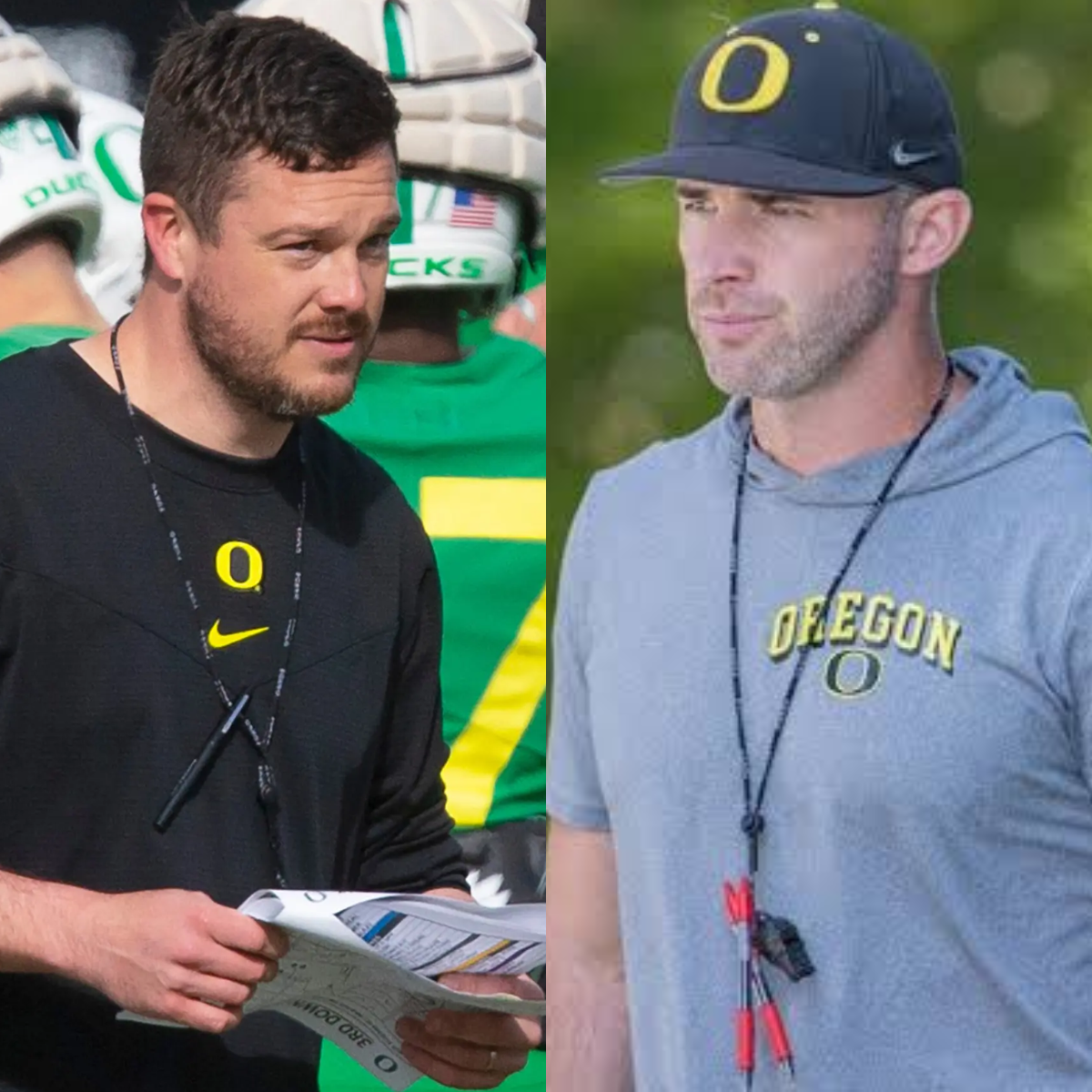
Dan Lanning has made a surprising decision regarding offensive coordinator Drew Mehringer as Oregon prepares for its enormous Week 4 road showdown against the USC Trojans.
Rather than reducing Mehringer’s responsibilities following Oregon’s turbulent opening weeks, Lanning is giving his offensive coordinator greater authority over Saturday’s offensive operation against USC.
The decision includes expanded control of play calling, situational sequencing, tempo changes, and offensive adjustments whenever USC presents defensive looks Oregon did not anticipate beforehand.
Lanning’s move immediately becomes fascinating because Mehringer faced significant criticism following Oregon’s stunning 39 to 31 road defeat against Oklahoma State earlier this month.
That afternoon raised uncomfortable questions surrounding both of Oregon’s new coordinators and whether offseason staff changes had disrupted a program carrying championship expectations.
Lanning strongly defended Mehringer afterward, refusing to accept the suggestion that Oregon’s problems could simply be blamed upon one coordinator or one coaching decision.
He acknowledged that Oregon needed better play calls, but emphasized execution, preparation, communication, and collective coaching responsibility as equally important factors.
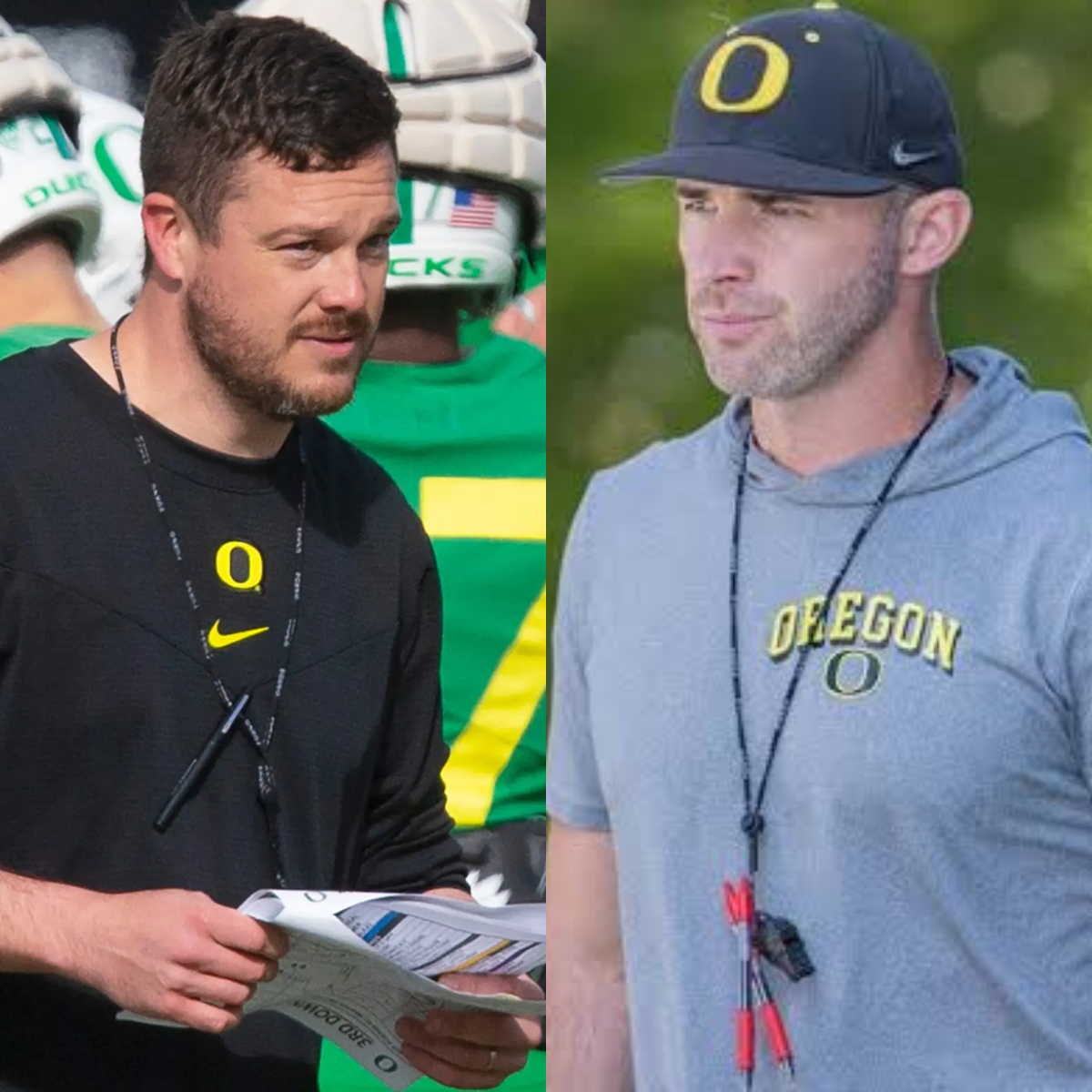
That public support now appears even more significant as Oregon prepares for perhaps its most consequential game of the young season.
Instead of responding to criticism by becoming more controlling offensively, Lanning’s surprising decision demonstrates increased trust in the coordinator he promoted during the offseason.
Within this scenario, Mehringer will have greater freedom to change tempo, attack favorable matchups, and adjust offensive sequencing without waiting for extended sideline discussions.
Quarterback Dante Moore would also receive additional flexibility to identify pressure and change certain protections or concepts before the football is snapped.
The objective is straightforward: Oregon wants its offense reacting faster whenever USC changes defensive structure instead of spending several possessions searching for answers.
That issue became particularly noticeable against Oklahoma State, when Oregon struggled to consistently adjust while the Cowboys repeatedly created uncomfortable situations.
Lanning admitted afterward that his team needed to make adjustments faster when opponents presented approaches Oregon had not completely anticipated during preparation.
That admission provides important context for why giving Mehringer greater control could represent a logical response rather than an emotional coaching gamble.
Oregon demonstrated what the system can produce when everything operates properly during its extraordinary 84 to 0 victory over Portland State.
The Ducks rushed for 273 yards while holding Portland State to only two, producing overwhelming control throughout virtually every phase of the contest.
Mehringer also displayed considerably more creativity, incorporating different formations, direct snaps, quarterback alignments, and concepts designed to challenge defensive recognition.
Lanning specifically praised that creativity afterward, while emphasizing that Oregon successfully executed many concepts that had already appeared consistently during practice.
That detail matters because the Portland State performance was not simply Oregon overwhelming an inferior opponent through superior individual athleticism.
The offense also appeared more organized, creative, confident, and connected than it had during the disappointing loss one week earlier.
However, nobody inside Oregon’s program should confuse dominating Portland State with proving that every offensive concern has suddenly disappeared.
USC represents an entirely different examination, particularly inside the Los Angeles Memorial Coliseum with Oregon beginning Big Ten competition away from Autzen Stadium.
The Trojans enter the matchup undefeated, carrying confidence and enough offensive firepower to punish Oregon whenever the Ducks waste possessions through mistakes.
That reality could force Mehringer into a much more aggressive approach because Oregon cannot reasonably expect another opponent to remain scoreless throughout four quarters.
Every possession could become valuable, particularly if USC establishes offensive rhythm early and forces Moore to answer touchdowns rather than patiently manage field position.
Lanning’s decision therefore places considerable responsibility upon Mehringer at exactly the moment when scrutiny surrounding Oregon’s coaching staff will become most intense.
If the offense performs efficiently, giving Mehringer additional control could be viewed as one of Lanning’s most important decisions of September.
If Oregon struggles again, however, questions surrounding the coordinator will inevitably become louder because increased authority also creates increased accountability.
That risk apparently has not changed Lanning’s willingness to trust a coach who has worked alongside him since his Oregon tenure began.
Mehringer originally joined Lanning’s inaugural staff in 2022 before becoming co-offensive coordinator and eventually receiving the full offensive coordinator position entering 2026.
His familiarity with Oregon’s personnel and culture was one major reason Lanning chose internal continuity after former coordinator Will Stein departed the program.
Mehringer also entered the position emphasizing flexibility rather than forcing players into an offensive philosophy that failed to match their individual strengths.
That philosophy could become especially valuable against USC because Oregon may need several different methods of attacking throughout Saturday’s game.
The Ducks cannot simply assume one successful first-quarter concept will continue producing favorable results after USC’s coaching staff begins making adjustments.
Mehringer must anticipate those responses and remain willing to change formations, tempo, personnel, and offensive emphasis before the Trojans completely eliminate successful concepts.
That ability to remain one adjustment ahead could ultimately determine whether Oregon controls Saturday’s game or spends another afternoon reacting too slowly.
Moore becomes equally important because greater offensive freedom only works when the quarterback processes defensive information accurately and communicates effectively with teammates.
Oregon possesses enough explosive talent around him to create enormous problems whenever protection provides enough time for routes and reads to develop properly.
The challenge involves maintaining balance so USC cannot simply attack Moore without respecting Oregon’s ability to consistently move the football on the ground.
Against Portland State, the Ducks finally rediscovered that rushing identity after being outrushed significantly during their opening two games.
Lanning will want that physicality traveling to Los Angeles because controlling the running game could prevent USC from dictating Oregon’s offensive tempo.
A dependable rushing attack would also give Mehringer greater flexibility when designing play action concepts capable of producing explosive opportunities downfield.
Those opportunities become particularly valuable when playing an opponent possessing enough offensive talent to transform one defensive mistake into immediate scoreboard pressure.
Lanning has already made clear that Saturday cannot simply be treated as another ordinary football game despite his emphasis upon maintaining preparation and execution.
Oregon and USC possess considerable history, elite recruiting profiles, championship expectations, and rosters filled with players capable of deciding games individually.
There is also additional pressure surrounding Oregon because another defeat would significantly complicate the Ducks’ ambitions after their unexpected loss to Oklahoma State.
Lanning refuses to publicly obsess over postseason scenarios, instead emphasizing circumstances his players and coaches can actually control throughout preparation.
That approach explains why his decision regarding Mehringer would focus upon offensive operation rather than dramatic staff changes designed merely to satisfy outside criticism.
Firing responsibilities around after three games could create additional confusion precisely when Oregon needs clarity entering its most difficult matchup.
Giving Mehringer stronger control sends the opposite message: Lanning believes the coordinator should attack the problem rather than coach cautiously because of criticism.
That psychological element could become extremely important because conservative decision making frequently appears when coaches begin worrying more about mistakes than creating advantages.
Oregon needs Mehringer confident enough to remain aggressive while still understanding that reckless decisions could give USC favorable field position and additional possessions.
Finding that balance will require communication between Mehringer, Lanning, Moore, and the entire offensive staff throughout Saturday’s game.
The Ducks also need cleaner execution from their offensive line because creative play calling becomes meaningless when pressure destroys concepts before they develop.
Oregon has already dealt with injuries affecting offensive personnel, increasing the importance of communication whenever USC attempts to disguise pressure or overload protection.
Mehringer’s expanded authority would allow him to respond immediately rather than allowing unsuccessful concepts to remain in the game plan for several additional possessions.
That responsiveness is exactly what Lanning demanded following Oklahoma State, when he said Oregon needed to adjust faster against unexpected approaches.
Portland State provided evidence that Oregon absorbed some of those lessons, but Saturday will reveal whether those improvements survive against elite competition.
USC will not provide Oregon the enormous talent advantage it enjoyed last Friday, and mistakes will carry substantially greater consequences.
That makes this matchup the first meaningful evaluation of whether Mehringer can successfully lead Oregon’s offense through adversity as the primary coordinator.
Lanning’s surprising decision therefore should not be interpreted as removing himself from Oregon’s offensive operation or surrendering overall responsibility.
The head coach has repeatedly made clear that every coaching decision ultimately belongs to him, regardless of which coordinator makes the individual play call.
Instead, this move represents Lanning defining responsibilities more clearly while demanding faster decision making when Oregon encounters unexpected resistance.
It is simultaneously a vote of confidence and an enormous challenge for Mehringer entering the most important game of his young tenure as coordinator.
Oregon has already experienced dominance, frustration, criticism, and redemption during an unusually dramatic opening three weeks of the season.
Now the Ducks must prove their 84 point explosion represented genuine progress rather than simply an overwhelming performance against an overmatched opponent.

USC will provide that answer quickly, particularly if the Trojans force Oregon into uncomfortable third downs and disrupt Moore during early possessions.
Mehringer will have greater responsibility for finding solutions, while Lanning will ultimately carry responsibility for trusting him with those decisions.
That combination creates enormous stakes around an offensive coordinator who entered September expecting pressure but probably never imagined receiving this much attention immediately.
For Lanning, however, retreating from his offseason decision after only three games would contradict everything he publicly said following Oklahoma State.
He defended Mehringer when criticism was loudest, demanded improvement afterward, and then watched Oregon produce its most explosive offensive performance of the season.
Now he is placing even greater trust in his coordinator when Oregon needs its offense functioning at its highest level.
Saturday against USC will determine whether that trust becomes one of the season’s smartest adjustments or another source of uncomfortable questions.
Either way, Mehringer has received exactly what every offensive coordinator eventually demands: authority, responsibility, and an opportunity to prove his system works under pressure.
This article was created by fans to spark lively fictional debate and discussion among fellow fans.