The New York Giants had every reason to celebrate.
After surviving a late comeback attempt from the Tennessee Titans and securing a hard-fought 12–7 victory, New York had protected its home field and delivered a memorable defensive performance in front of its fans.
The Giants controlled the game for most of the afternoon. Their defense kept Tennessee scoreless through the first three quarters, while rookie kicker Dominic Zvada calmly converted four field goals to build a 12–0 advantage.
But according to the scene imagined in this postgame tribute, what happened after the final whistle became even more emotional than the football itself.
Instead of immediately disappearing into the locker room, the Giants remained together on the field.
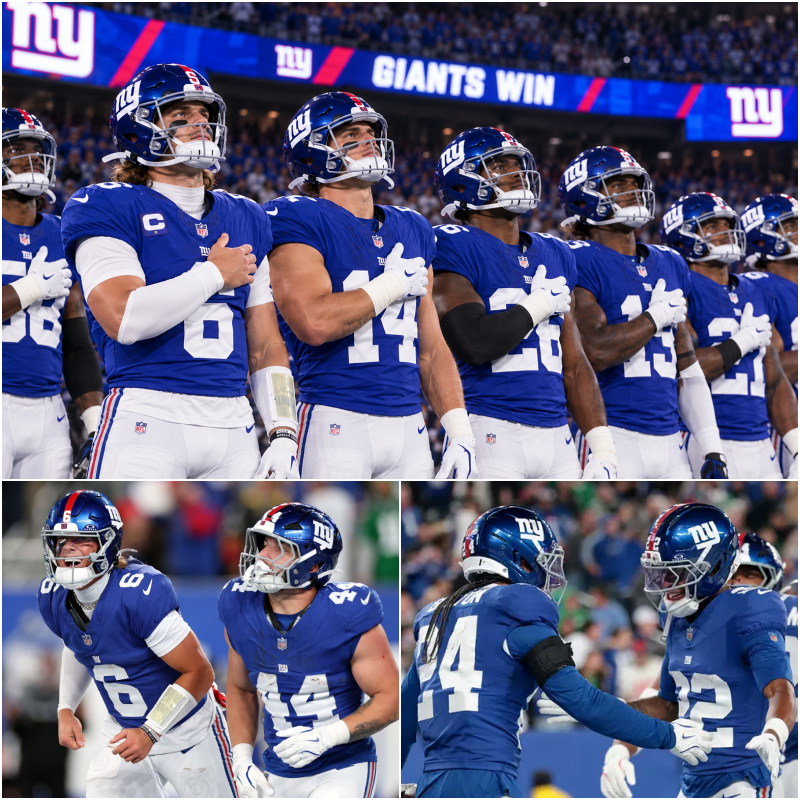
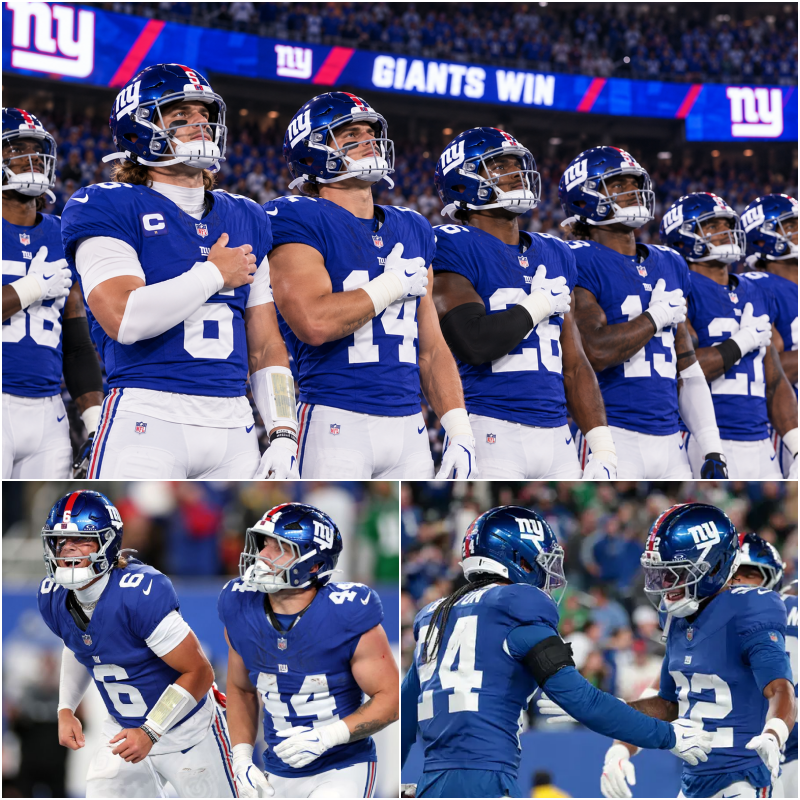
Players, coaches and staff slowly gathered near midfield. Shoulder to shoulder and still wearing their game uniforms, they stood before the remaining fans as the stadium gradually became quiet.
Then came the unexpected moment: the group began singing the National Anthem together.
There was no elaborate production surrounding the scene. No choreographed celebration. No attempt to transform it into another football spectacle.
The emphasis was simply on unity.
For a team that had just spent four quarters battling Tennessee in a physical matchup, the contrast was striking.
Only minutes earlier, MetLife Stadium had been filled with noise.
New York had entered the fourth quarter holding a 12–0 lead, but the Titans refused to disappear. Tennessee finally found the end zone when quarterback Cam Ward connected with Wan'Dale Robinson for a 4-yard touchdown, cutting the Giants' advantage to 12–7 with 5:39 remaining.
Suddenly, New York needed one more defensive stand.
They got it.
With Tennessee driving deep into Giants territory and threatening to complete the comeback, Ward reached the Giants' 7-yard line with less than a minute remaining.
Then came the defining moment.
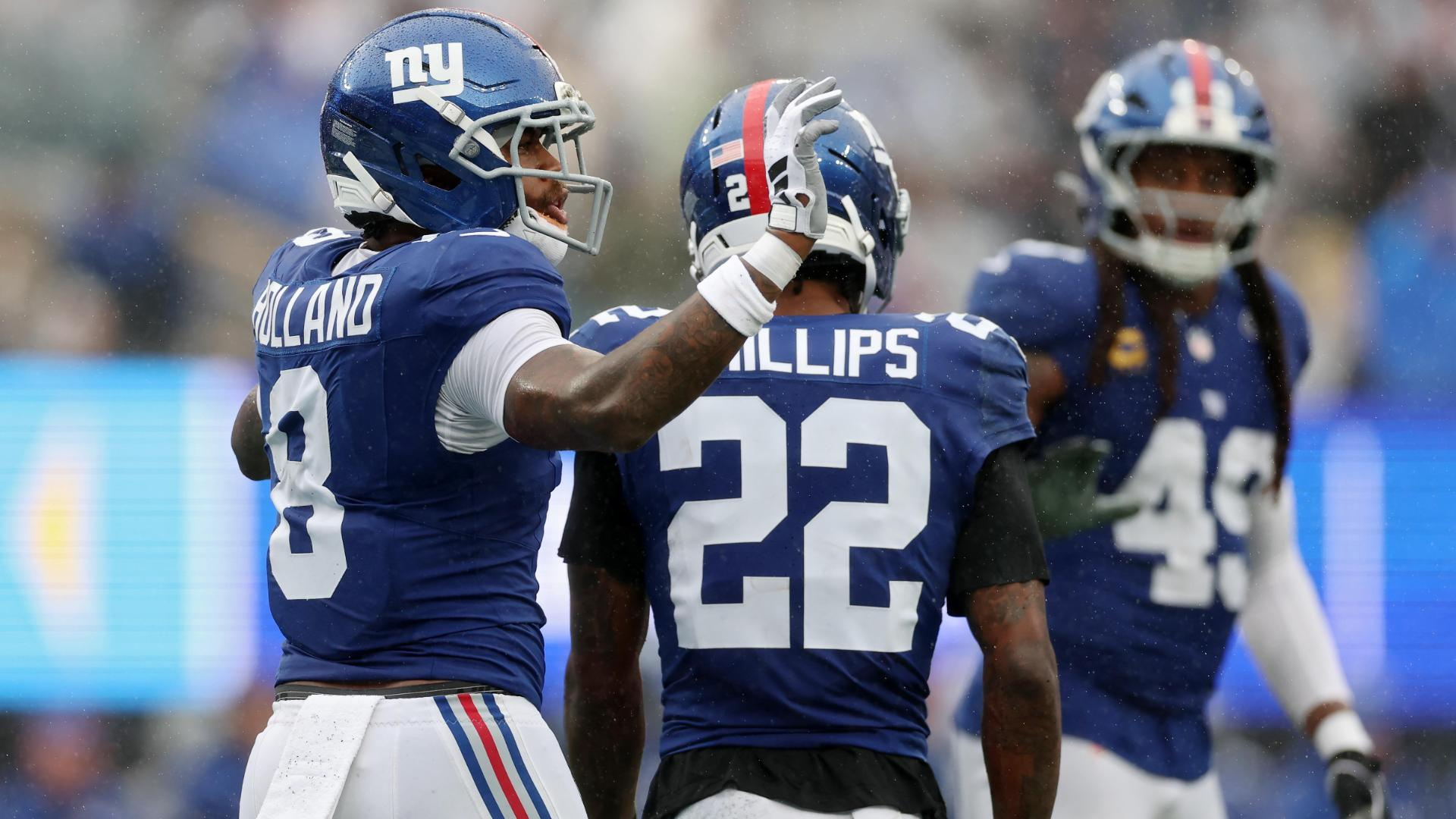
Ward's pass toward the end zone was intercepted by Jevón Holland, ending Tennessee's final opportunity and sealing the Giants' 12–7 victory.
The emotional release was immediate.
Players celebrated. Fans roared. Teammates embraced after surviving a game that had become considerably more dangerous than the Giants' early dominance suggested.
New York's defense had held Tennessee without a touchdown until the final minutes, while the Giants avoided turning the ball over.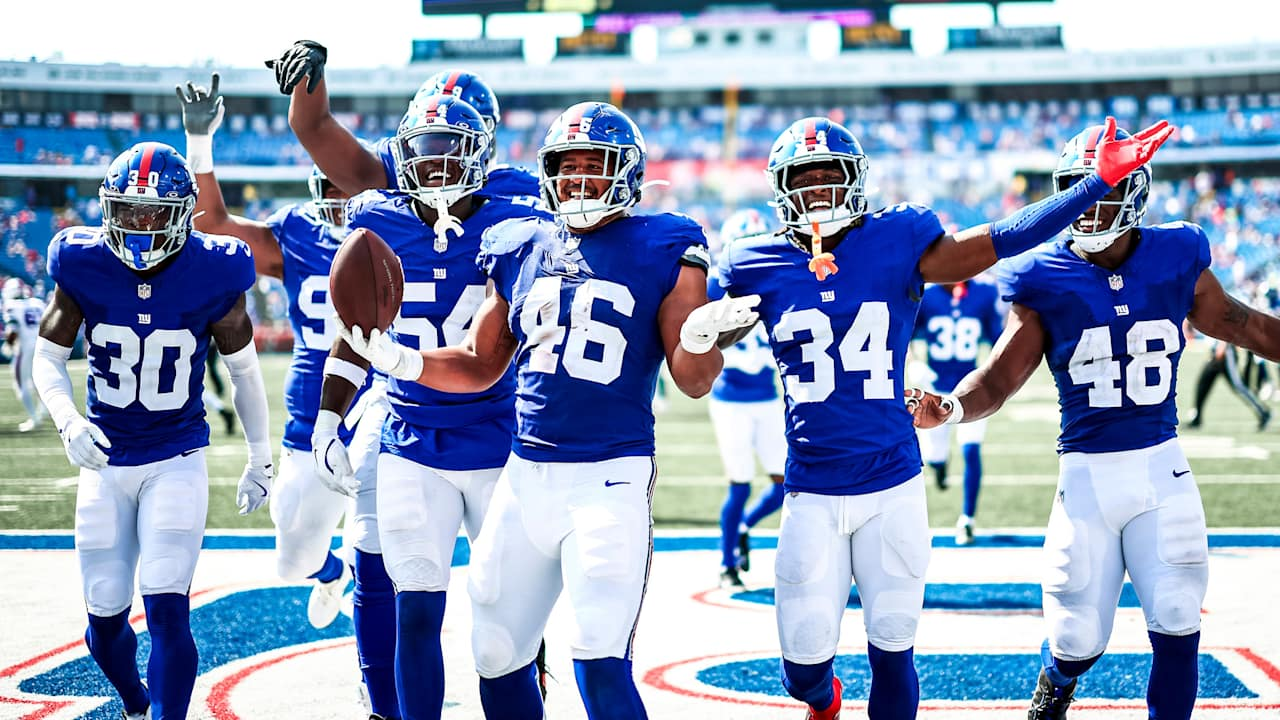
Jameis Winston finished with 118 passing yards without an interception, while Cam Skattebo contributed 60 rushing yards and another 40 receiving yards. Meanwhile, Zvada provided all 12 of New York's points with four successful field goals.
But the biggest defensive moment belonged to Holland.
His interception in the end zone not only stopped Tennessee's comeback attempt but also gave the Giants another dramatic finish to a game that had seemed under control for much of the afternoon.
Yet once the competition ended, the imagined anthem scene shifted the focus away from statistics.
As the players stood together, some were described with their hands over their hearts. Others looked toward the stands. Coaches and staff joined them along the sideline.
The crowd, moments earlier desperate to celebrate a victory, became almost completely still.
It was the kind of contrast that makes sporting moments feel larger than the result itself.
Fans rose from their seats. Parents held their children close. Thousands watched the field rather than immediately heading toward the exits.
For those few minutes, there was no offense or defense.
There were no Titans and Giants battling for field position.
There was simply a group sharing the same moment.
That sense of togetherness would have carried particular weight following such a physically demanding game.
New York had been forced to withstand Tennessee's late offensive surge. The Titans ultimately produced 262 total yards, compared with the Giants' 238, and controlled possession for more than 25 minutes.
But the Giants compensated with timely defensive plays and, most importantly, zero turnovers.
The Giants bent, but they never completely broke.
And when Tennessee threatened to steal the game late, Jevón Holland delivered the decisive answer.
In the imagined postgame scene, however, there were no touchdown celebrations or dramatic poses.
There were no spotlights.
No choreography.
No rehearsed spectacle.
Instead, the players were portrayed as exhausted competitors standing together after a difficult afternoon, acknowledging the crowd and sharing a moment built around reflection rather than celebration.
That simplicity is what gives the scene its emotional appeal.
Professional football is normally defined by noise — roaring crowds, crashing helmets, whistles, music and constant movement.
A packed stadium becoming quiet can sometimes feel more powerful than another eruption of cheers.
The Giants had already made their statement on the scoreboard.
Giants 12, Titans 7.
Zvada had delivered.
Holland had delivered.
The defense had delivered.
And New York had found a way to finish.
But the postgame tribute imagined something beyond the numbers: a team choosing unity after competition and reflection after victory.
For the New York Giants, the afternoon ended with another win.
For the fans, the lasting image was meant to represent something more.
Pride.
Unity.
Heart.