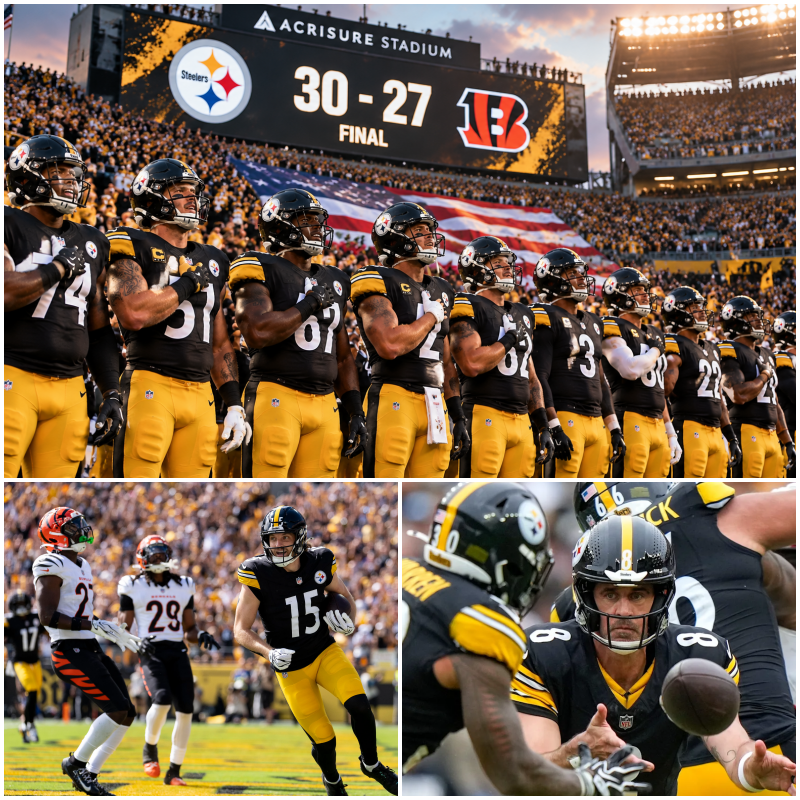
PITTSBURGH — Football has always been a game defined by numbers, statistics, and scoreboards. Yards gained, third-down conversions, and final scores usually dictate the narrative of any given Sunday. But every once in a while, a game transcends its final tally, reminding fans and athletes alike why sports hold such a profound grip on the human spirit. Week 3 of the NFL season offered precisely that kind of transcendent moment, capped by an astonishing 30–27 victory for the Pittsburgh Steelers over the Cincinnati Bengals.
A Hard-Fought Battle on the Gridiron
The matchup itself was nothing short of a classic divisional slugfest. Both the Steelers and the Bengals entered the field with high stakes, and the game played out as a showcase of control, resilience, and timely offense. Throughout the four quarters, every possession felt intensely calculated. Every defensive stop reinforced the standards of physical play both teams are known for, and every touchdown served as a statement of command.
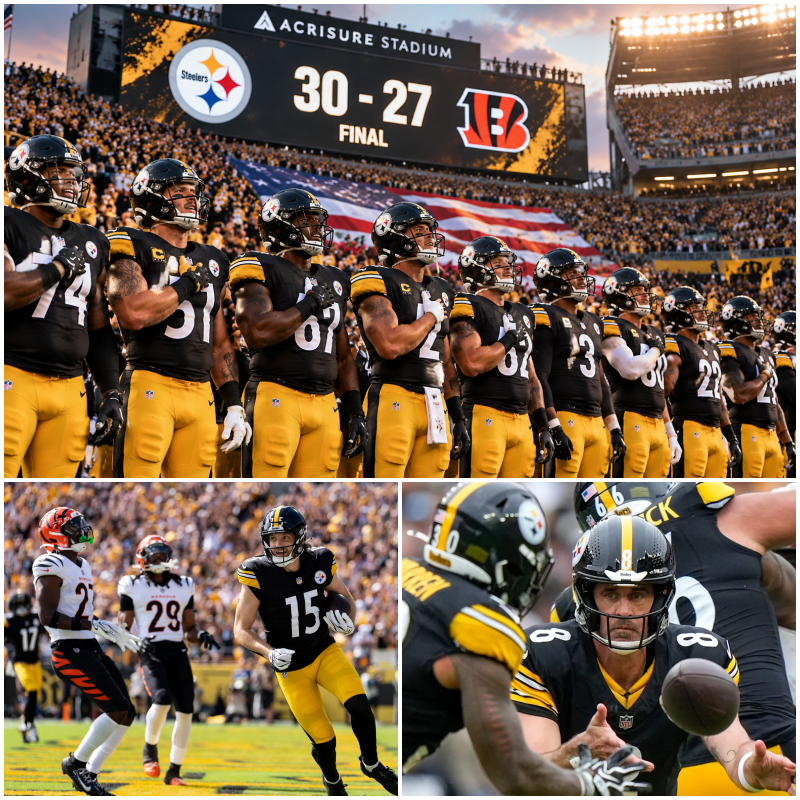
For Pittsburgh, a team long defined by discipline and quiet excellence, the game required every ounce of focus. The offense executed under immense pressure, while the defense made crucial stops when the game hung in the balance. As the final seconds ticked away and the scoreboard read 30–27 in favor of the Steelers, a wave of immense satisfaction and exhausted pride washed over the stadium. The hard-earned victory secured a vital win in the AFC North, sending waves of excitement through the loyal fanbase.
Normally, the immediate aftermath of such a dramatic victory follows a familiar script: players celebrate on the field, head coaches exchange quick handshakes, and both teams retreat to the locker rooms to decompress. But what unfolded next on the turf was something no one saw coming.
A Moment That Stunned the Stadium
Just as the cheers began to fade and sections of the crowd prepared to head for the exits, the atmosphere shifted entirely. Instead of walking down the tunnel, the entire Pittsburgh Steelers team slowly returned to the field together. Shoulder to shoulder, players, coaches, and support staff gathered near midfield, surrounding a single microphone.
At first, a wave of confusion buzzed through the remaining crowd. There was no public address announcement, no pyrotechnics, and no promotional spectacle. Instead, the team began to sing the National Anthem.
Their voices did not attempt to dominate the moment; rather, they carried it with a calm, steady emotion. There were no rehearsed solos or grand theatrical gestures—just a unified group of athletes, still wearing their sweat-stained, game-worn uniforms, sharing a song that clearly meant far more to them than the numbers on the scoreboard.
Along the sidelines, assistant coaches and athletic trainers stood motionlessly with their hands placed over their hearts. Some players closed their eyes, while others glanced up into the stands as thousands of fans abruptly fell completely silent. In a matter of seconds, a roaring football stadium transformed into a space of profound reverence and stillness.
A Collective Pause
One by one, the fans in the stands rose to their feet once more—not to cheer for a touchdown, but to honor the raw vulnerability unfolding before them. Many spectators wiped away tears as the unvarnished harmonies echoed across the concrete bowl. Parents lifted their young children onto their shoulders, and total strangers stood side-side in a shared, reverent silence. It felt far less like a professional sporting event and much more like a collective pause, offering a stark reminder of perspective after the violent intensity of competition.
Within minutes, digital clips of the scene began flooding social media platforms. The raw, unfiltered nature of the videos captured the essence of the event: no polished stage lighting, no commercial production, and no corporate agenda—just a football team choosing deep reflection after a grueling victory. Sports analysts and commentators later described it as a rare, genuine display of unity that stretched far beyond the boundaries of the gridiron.
Beyond the Scoreboard
What made the moment so deeply powerful was not musical perfection. In fact, a few voices cracked from sheer exhaustion, and the team's harmony was far from flawless. Yet, that imperfection was precisely the point. It was real; it was deeply human. It featured a group of fierce competitors who had just left every ounce of energy on the field, taking a collective breath to acknowledge something much larger than sports itself.
In a sport defined by tactical execution and ruthless competition, the Pittsburgh Steelers chose stillness over spectacle. They chose gratitude and reflection. There were no spotlights, no choreography, and no rehearsed routines—just a brotherhood united after a hard-fought win, sharing a moment of pride and humility with the fans who stood by them through every yard.
In that quiet, unforgettable scene after the final whistle, the Pittsburgh Steelers achieved something greater than a 30–27 win. They reminded everyone watching why sports still matter so deeply to our culture: for their ability to foster pride, absolute unity, and enduring heart.